Frequently asked questions.
What information should I have before contacting an engineer for a septic system project?
Before scheduling a consultation, it’s helpful to know your property’s address or tax map number, lot size, and any existing site plans if available. You should also be prepared to describe your project goals — whether it’s new construction, a replacement system, or an expansion — and the number of bedrooms or estimated water usage.
Do I need a site evaluation before designing a septic system?
Yes. After the initial phone call or email, a site evaluation/site survey is the first step in the process. It includes soil testing (percolation and/or deep-hole tests depending on the project) to determine how well your property can absorb wastewater and to identify suitable areas for a septic system that meet New York State Department of Health (NYSDOH) requirements. A site survey is then conducted using high precision mapping equipment.
What should I expect as far as cost?
For engineering a septic system/leach field, expansion or system repair, you might expect to budget between $2,500 to $3,000— which is inclusive of a site visit, site survey/high-precision mapping, percolation test, soil identification, engineering and delivered stamped plans— depending on the labor involved and complexity of the project.
Other costs may include sewer camera inspection, deep hole test (which includes mobilization of equipment) and any labor or supplies used for repairs such as septic or root scrubs, risers, etc.
Please contact Mark de Jong for a customized quote specific to your septic or other project, including building or foundation design, drainage solutions, etc.
Who performs the soil testing?
A licensed, professional engineer is required to perform a percolation test in many municipalities. We evaluate soil conditions, record results, and determine the best system design based on site limitations.
Who completes the work?
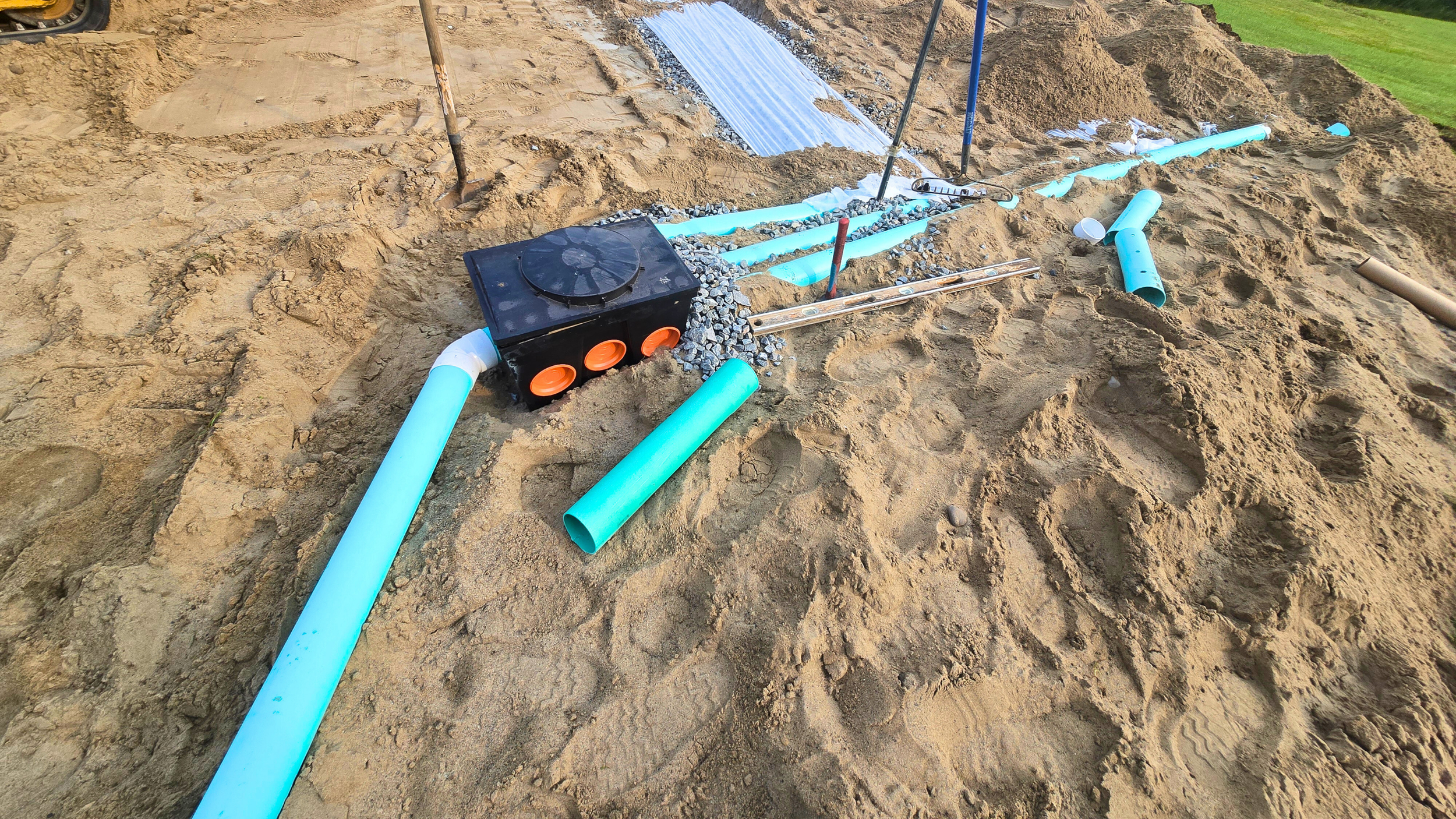
As Mark de Jong is both an engineer and installer, we can complete your entire project by partnering with our Excavation company de Jong Excavation to ensure seamless communication from design through installation, helping your project move efficiently from start to finish. We can provide you with a quote for installation if interested.
What permits are required for a new or replacement septic system in New York State?
You’ll need approval from the local code enforcer, and in some cases approval from the health department or county environmental services before installation. Makron Engineering will prepare plans in compliance with NYSDOH and local codes. If you select de Jong Excavation for your installer, we will obtain all necessary permits on your behalf. When your project is completed, whether we install or not, Mark de Jong will come to inspect the new system and prepare an installation report and as-built drawings for code enforcement.
How long does it take to design a septic system?
The timeline varies by project complexity and the engineer’s workload, but many designs are completed within 3-4 weeks after the site survey is done. If your project requires special permissions from the Adirondack Park Agency, Department of Health or Department of Transportation, we can work on your behalf to obtain approvals or permits.
What happens if my site doesn’t meet standard septic requirements?
If your property has challenging conditions — such as shallow bedrock, poor drainage, or limited space — we can design an alternative or advanced treatment system that meets New York State standards, or may be able to refer you to alternative contractors that may be more suitable for your project.
Do you provide inspections or maintenance services?
Yes. We offer operation and maintenance (O&M) services for advanced treatment systems, pumps, and alarms to keep your system functioning properly and compliant with regulatory requirements.